Korean Bibimbap
Highlighted under: Heritage Favorites
Korean Bibimbap is a vibrant and flavorful dish that brings together a variety of vegetables, rice, and protein in a delicious mix. It's not only visually appealing but also packed with nutrients, making it a perfect meal for any occasion.
Korean Bibimbap is a traditional Korean dish that translates to 'mixed rice.' It's a colorful and nutritious meal that allows for creativity with various ingredients. Whether you use beef, chicken, or tofu, the combination of fresh vegetables, a perfectly fried egg, and spicy gochujang sauce creates an irresistible flavor profile.
Why You Will Love This Recipe
- A delightful mix of textures and flavors that excite your palate
- Customizable with your favorite proteins and vegetables
- Healthy and satisfying, perfect for a balanced meal
The Essence of Bibimbap
Bibimbap, which translates to 'mixed rice,' is a quintessential Korean dish that exemplifies the art of combining flavors and textures. This dish is not just a meal; it’s an experience that showcases the harmony between various ingredients. Each component offers its unique taste, from the earthy mushrooms to the crunchy carrots, all coming together to create a vibrant and satisfying bowl.
Originating from the Korean tradition of using leftover ingredients, bibimbap is the perfect solution for anyone wanting to reduce food waste. With its colorful array of vegetables and proteins, this dish encourages creativity and individuality in the kitchen. You can easily adapt it to your preferences, making it a versatile option for all palates.
Health Benefits of Bibimbap
Korean Bibimbap is not only delicious but also packed with nutrients. The variety of vegetables provides essential vitamins and minerals, while the rice serves as a good source of carbohydrates for energy. By incorporating lean proteins like beef or tofu, you're ensuring a balanced meal that will keep you full and satisfied.
Additionally, bibimbap can easily cater to various dietary needs. You can substitute or omit ingredients according to your preferences, whether you’re vegan, vegetarian, or following a gluten-free diet. This flexibility makes it a fantastic choice for families or gatherings where everyone has different dietary restrictions.
Serving and Enjoying Bibimbap
One of the joys of bibimbap is how it encourages sharing and communal dining. Serve the ingredients separately, allowing each person to customize their bowl according to their tastes. This interactive dining experience not only makes mealtime fun but also promotes mindful eating as everyone takes the time to appreciate the vibrant colors and flavors on their plates.
When serving bibimbap, don’t forget the gochujang! This spicy Korean chili paste adds depth and a kick to the dish. Encourage your guests to add as much or as little as they like, elevating their bibimbap experience to a whole new level of deliciousness.
Ingredients
For the Bibimbap
- 2 cups cooked short-grain rice
- 1 cup spinach, blanched
- 1 cup carrots, julienned
- 1 cup zucchini, julienned
- 1 cup bean sprouts, blanched
- 1 cup mushrooms, sliced
- 1 cup cooked beef (or tofu for a vegetarian option)
- 4 eggs
- 2 tablespoons sesame oil
- Salt to taste
- Gochujang (Korean chili paste) for serving
Make sure to prepare all ingredients before assembling your Bibimbap.
Instructions
Prepare the Vegetables
Heat a pan over medium heat and add 1 tablespoon of sesame oil. Sauté the carrots, zucchini, and mushrooms separately until tender. Season with salt. Blanch the spinach and bean sprouts in salted water, then drain.
Cook the Protein
If using beef, cook it in the same pan until browned. For tofu, sauté until golden. Set aside.
Fry the Eggs
In the same pan, add a little more oil and fry the eggs sunny-side up.
Assemble the Bibimbap
In a large bowl, place a serving of rice at the bottom. Arrange the cooked vegetables and protein on top. Add a fried egg in the center. Drizzle with sesame oil and serve with gochujang on the side.
Mix the ingredients thoroughly before enjoying your Bibimbap.
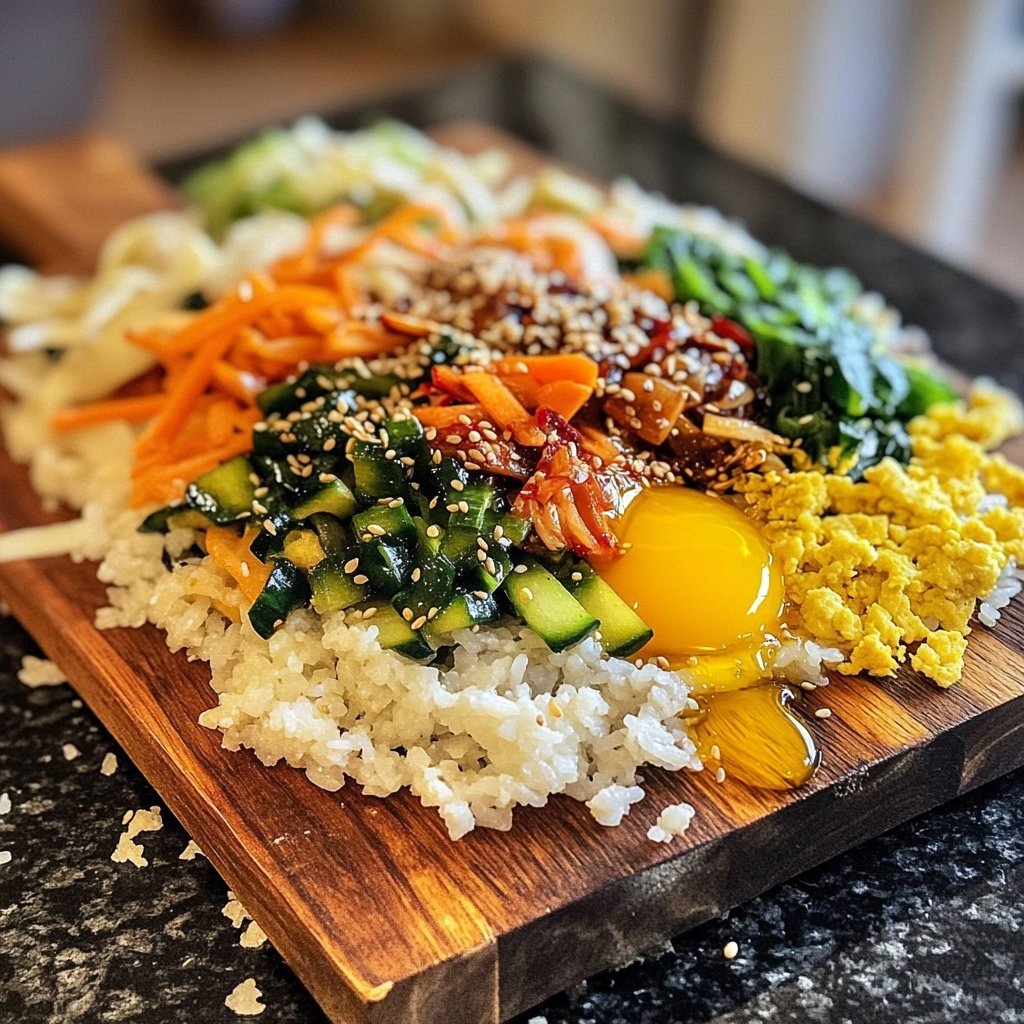
Pro Tips
- Feel free to customize your Bibimbap with seasonal vegetables or your favorite protein. Adjust the spiciness by adding more or less gochujang.
Tips for Perfect Bibimbap
To achieve the perfect bibimbap, the key is in the preparation of the ingredients. Make sure each vegetable is cooked separately to preserve its individual flavor and texture. This not only enhances the overall taste of the dish but also ensures that each bite is a delightful mix of colors and textures.
Using freshly cooked short-grain rice is essential for an authentic bibimbap. The stickiness of the rice helps the ingredients adhere together, making it easier to mix and enjoy. If you're short on time, consider using a rice cooker for perfectly cooked rice every time.
Variations to Try
While the classic bibimbap is delicious as is, don’t hesitate to experiment with different ingredients. Try adding kimchi for a tangy twist or swapping out the beef for grilled chicken or shrimp for a different flavor profile. The beauty of bibimbap lies in its adaptability, so feel free to get creative!
For a unique spin, consider serving bibimbap in a hot stone bowl, known as dolsot bibimbap. The sizzling stone bowl not only keeps the dish warm but also creates a crispy layer of rice at the bottom. This crunchy texture adds an exciting contrast to the tender vegetables and protein.
Questions About Recipes
→ Can I make Bibimbap vegetarian?
Yes! Simply replace the beef with tofu or additional vegetables.
→ What is the best type of rice to use?
Short-grain rice is traditional for Bibimbap as it has the right texture to hold the ingredients together.
→ Can I prepare the ingredients in advance?
Absolutely! You can prep the vegetables and protein a day in advance and store them in the refrigerator.
→ How do I store leftovers?
Store leftovers in an airtight container in the refrigerator for up to 2 days. Reheat before serving.
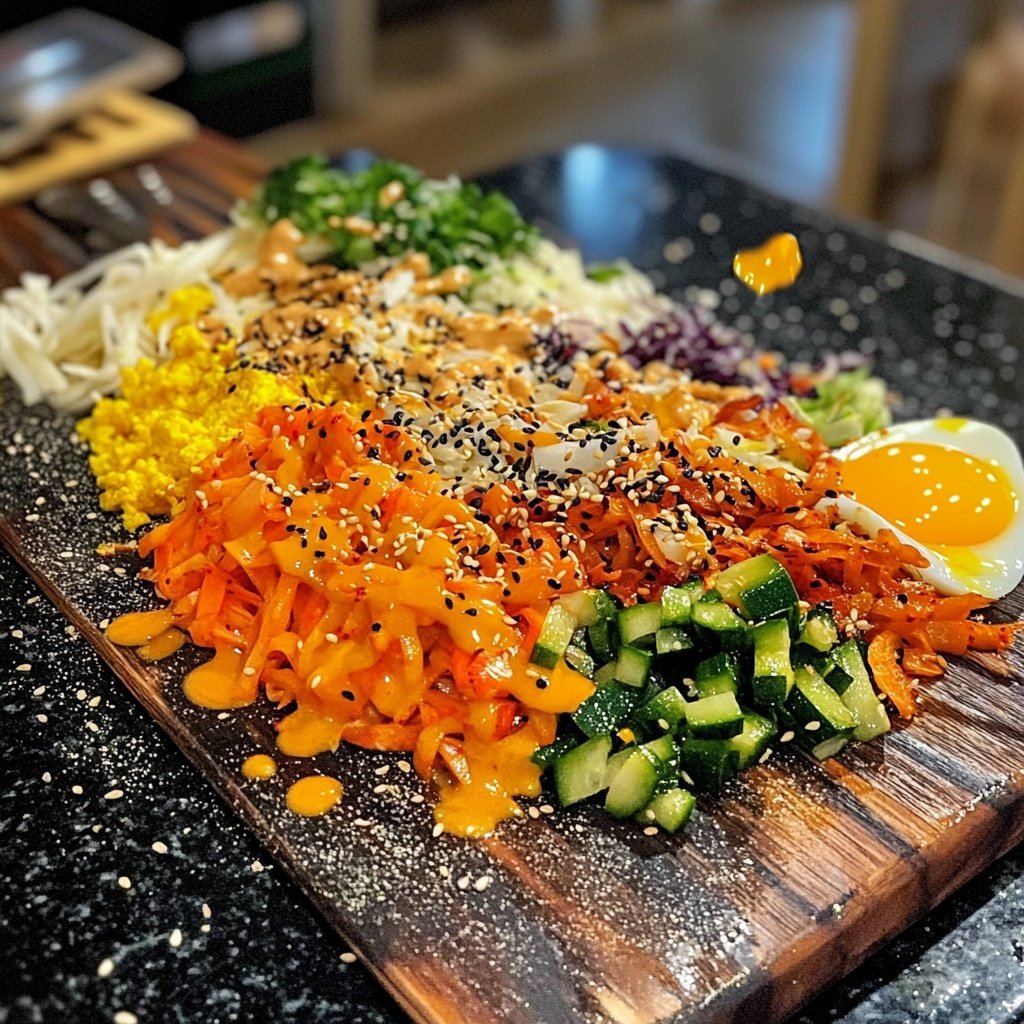
Korean Bibimbap
Created by: Elodie Fairfax
Recipe Type: Heritage Favorites
Skill Level: Intermediate
Final Quantity: 4 servings
What You'll Need
For the Bibimbap
- 2 cups cooked short-grain rice
- 1 cup spinach, blanched
- 1 cup carrots, julienned
- 1 cup zucchini, julienned
- 1 cup bean sprouts, blanched
- 1 cup mushrooms, sliced
- 1 cup cooked beef (or tofu for a vegetarian option)
- 4 eggs
- 2 tablespoons sesame oil
- Salt to taste
- Gochujang (Korean chili paste) for serving
How-To Steps
Heat a pan over medium heat and add 1 tablespoon of sesame oil. Sauté the carrots, zucchini, and mushrooms separately until tender. Season with salt. Blanch the spinach and bean sprouts in salted water, then drain.
If using beef, cook it in the same pan until browned. For tofu, sauté until golden. Set aside.
In the same pan, add a little more oil and fry the eggs sunny-side up.
In a large bowl, place a serving of rice at the bottom. Arrange the cooked vegetables and protein on top. Add a fried egg in the center. Drizzle with sesame oil and serve with gochujang on the side.
Extra Tips
- Feel free to customize your Bibimbap with seasonal vegetables or your favorite protein. Adjust the spiciness by adding more or less gochujang.
Nutritional Breakdown (Per Serving)
- Calories: 500 kcal
- Total Fat: 20g
- Saturated Fat: 4g
- Cholesterol: 186mg
- Sodium: 600mg
- Total Carbohydrates: 70g
- Dietary Fiber: 5g
- Sugars: 3g
- Protein: 18g