Filet Mignon with Red Wine Reduction
Highlighted under: Comfort Favorites
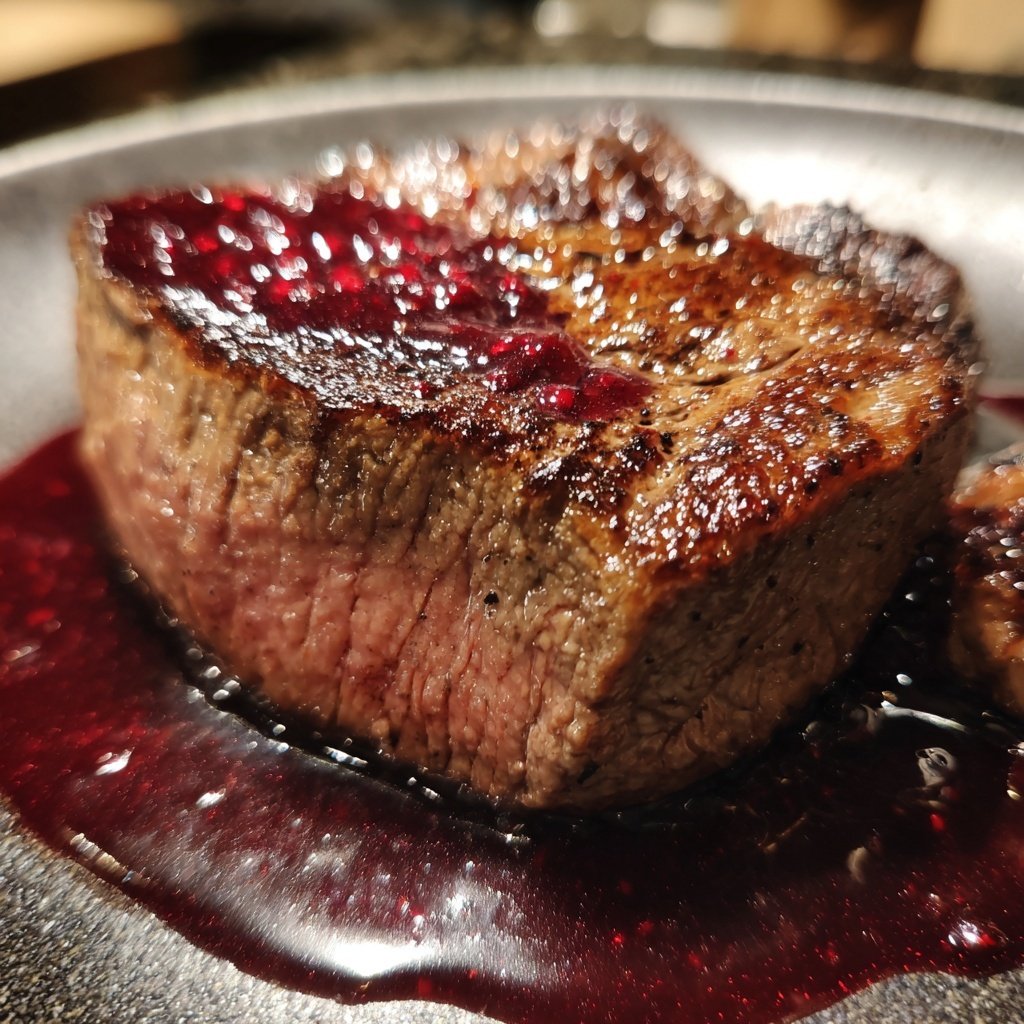
I absolutely love cooking Filet Mignon, especially when it's paired with a rich red wine reduction. This recipe truly elevates the tender steak to a gourmet experience. The combination of flavors is simply divine, and I find that taking the time to reduce the sauce enhances every bite. I’ve perfected this dish over the years, and I can assure you, it’s perfect for special occasions or a cozy night in. Let’s dive into the steps and start creating this delicious masterpiece together!
When I first attempted to make Filet Mignon, I was unsure of how to achieve that perfect sear while ensuring the inside remained tender and juicy. After several tries and experimenting with different cooking methods, I discovered that starting on the stovetop and finishing in the oven allowed for an exceptional texture. The key is to let the steak rest, which locks in the juices, making every bite incredibly flavorful.
As for the red wine reduction, I learned that using a high-quality wine really makes a difference. I carefully reduce the sauce until it's syrupy, which amplifies the depth of flavor, and I always add a pinch of salt to bring everything together. It’s become my go-to dish for impressing guests and celebrating special moments!
Why You’ll Love This Recipe
- Tender, melt-in-your-mouth filet mignon with a rich, savory sauce
- The balance of flavors from the red wine enhances the steak beautifully
- Impressive dish for dinner parties without requiring extensive culinary skills
The Importance of Resting Your Steak
Resting steak after cooking is a vital step that should not be overlooked. Once you remove the filet mignon from the oven, allow it to rest for at least 5 minutes. This period allows the juices to redistribute throughout the meat, ensuring that each bite is juicy and flavorful. Cutting into the steak too soon can cause the juices to run out, leading to a dry experience, which is definitely not what you want when enjoying such a tender cut.
During the resting phase, the steak continues to cook slightly, known as carryover cooking. Keeping the steak covered with foil can help retain heat without cooking it further, making it a great tactic to achieve that perfect medium-rare doneness. If you prefer your steak more well done, adjusting the resting time accordingly can be beneficial, as each thickness may vary slightly.
Choosing the Right Wine
When making the red wine reduction, choosing the right wine is essential for achieving depth in flavor. A good Cabernet Sauvignon is rich and robust, which complements the richness of the filet mignon beautifully. Avoid cooking wines; instead, select a bottle that you would enjoy drinking, as the quality of the wine directly influences the sauce's final taste. If you're looking for alternatives, a Merlot or a Pinot Noir can also work, but be mindful that the flavor profile will change slightly.
Additionally, if you’re unable to use wine due to dietary restrictions or personal preference, consider substituting with a high-quality beef broth mixed with a touch of red wine vinegar. This combination can mimic the acidity and depth that the original ingredient provides while keeping the sauce's integrity.
Tips for Perfecting the Reduction Sauce
Creating a smooth and rich red wine reduction necessitates attention to detail. When cooking down the wine and shallots, wait for the mixture to reach a boil before lowering the heat to let it simmer gently. High heat can cause the sauce to reduce too quickly, resulting in an overly concentrated, almost bitter flavor. Aim for a slow, steady simmer for about 10-15 minutes, stirring occasionally until the sauce coats the back of a spoon and achieves a glossy finish.
If you find your reduction too thin after simmering, you can always thicken it further by whisking in a pat of cold butter at the end to add richness and smoothness. On the other hand, if it’s too thick, adding a splash of broth or wine can help loosen it up while enhancing the flavors. Mastering this sauce will not only elevate the filet mignon but can also be a delightful addition to other meats or roasted vegetables.
Ingredients
For the Steak
- 2 filet mignon steaks
- Salt and pepper to taste
- 2 tablespoons olive oil
- 2 tablespoons butter
For the Red Wine Reduction
- 1 cup red wine (preferably Cabernet Sauvignon)
- 1 shallot, finely chopped
- 1 teaspoon fresh thyme leaves
- 1 tablespoon balsamic vinegar
Instructions
Cooking Instructions
Prepare the Steak
Season the filet mignon steaks generously with salt and pepper on both sides. In a large skillet, heat olive oil over medium-high heat until shimmering. Add the steaks and sear for 3-4 minutes on each side to form a golden crust. Once seared, add butter to the pan and baste the steaks for another minute.
Cook in the Oven
Transfer the skillet to a preheated oven at 400°F (200°C) and roast for about 6-8 minutes for medium-rare, depending on the thickness of the steaks. Use a meat thermometer to check for doneness.
Make the Red Wine Reduction
In the same skillet (draining excess fat if necessary), add the chopped shallot and sauté until translucent. Pour in the red wine and add thyme and balsamic vinegar. Bring to a boil and reduce heat, letting it simmer until reduced by half and slightly thickened.
Serve
Remove the steaks from the oven and let them rest for 5 minutes. Serve with the red wine reduction drizzled on top.
Enjoy Your Meal!
Pro Tips
- For the best flavor, use a wine you would enjoy drinking. Letting the steak rest is crucial for retaining its juices
- don’t skip this step!
Storing and Reheating Leftovers
If you find yourself with leftover filet mignon, it’s crucial to store it properly to maintain its quality. Allow the steaks to cool completely, then wrap them tightly in plastic wrap or aluminum foil, and place them in an airtight container. In the refrigerator, they can stay fresh for up to 3 days. However, for optimal flavor and texture, try to consume them as soon as possible.
When it comes to reheating, be gentle to avoid overcooking. The best method is to place the steak in a skillet over low heat, allowing it to warm gradually. Alternatively, you can use an oven set at a low temperature, around 250°F (120°C), which will warm the meat evenly without drying it out. I recommend adding a splash of beef broth or pouring a bit of the red wine reduction over the steak before reheating to add moisture.
Serving Suggestions
For a well-rounded meal, consider pairing your filet mignon with sides that complement its rich flavor. Creamy mashed potatoes or roasted asparagus can elevate the plate beautifully and offer a delightful contrast in textures. Additionally, a fresh arugula salad with a light vinaigrette can provide a refreshing counterpoint to the savory steak and sauce, enhancing the overall dining experience.
Wine pairing also plays a significant role in elevation. Serving the same Cabernet Sauvignon used in the reduction can bring harmony to your meal, while a well-chilled Pinot Noir can enhance the flavors without overwhelming them. Ensuring your dining environment reflects the gourmet nature of the dish, with proper table settings and dimmed lighting, can further enhance the special occasion feel.
Questions About Recipes
→ Can I replace red wine with something else?
Yes, you can use beef broth or grape juice for a non-alcoholic version, but the flavor will differ.
→ How can I ensure my steak is cooked perfectly?
Using a meat thermometer is the best way. Aim for 130°F (54°C) for medium-rare.
→ What side dishes pair well with filet mignon?
Mashed potatoes, roasted vegetables, or a fresh arugula salad complement this dish beautifully.
→ How do I store leftover filet mignon?
Wrap the steak tightly in foil or plastic wrap and refrigerate. It should be consumed within 3 days.
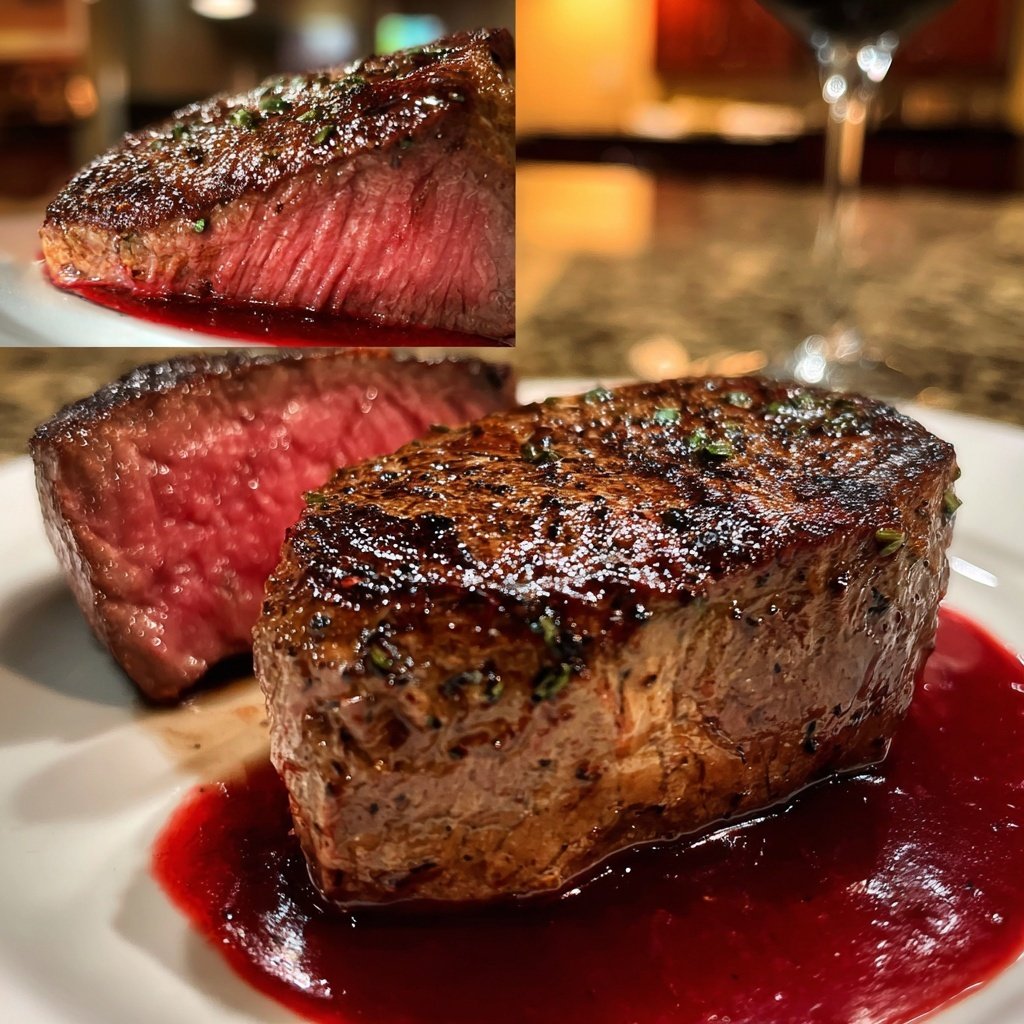
Filet Mignon with Red Wine Reduction
Created by: Elodie Fairfax
Recipe Type: Comfort Favorites
Skill Level: Intermediate
Final Quantity: 2 servings
What You'll Need
For the Steak
- 2 filet mignon steaks
- Salt and pepper to taste
- 2 tablespoons olive oil
- 2 tablespoons butter
For the Red Wine Reduction
- 1 cup red wine (preferably Cabernet Sauvignon)
- 1 shallot, finely chopped
- 1 teaspoon fresh thyme leaves
- 1 tablespoon balsamic vinegar
How-To Steps
Season the filet mignon steaks generously with salt and pepper on both sides. In a large skillet, heat olive oil over medium-high heat until shimmering. Add the steaks and sear for 3-4 minutes on each side to form a golden crust. Once seared, add butter to the pan and baste the steaks for another minute.
Transfer the skillet to a preheated oven at 400°F (200°C) and roast for about 6-8 minutes for medium-rare, depending on the thickness of the steaks. Use a meat thermometer to check for doneness.
In the same skillet (draining excess fat if necessary), add the chopped shallot and sauté until translucent. Pour in the red wine and add thyme and balsamic vinegar. Bring to a boil and reduce heat, letting it simmer until reduced by half and slightly thickened.
Remove the steaks from the oven and let them rest for 5 minutes. Serve with the red wine reduction drizzled on top.
Extra Tips
- For the best flavor, use a wine you would enjoy drinking. Letting the steak rest is crucial for retaining its juices
- don’t skip this step!
Nutritional Breakdown (Per Serving)
- Calories: 540 kcal
- Total Fat: 38g
- Saturated Fat: 15g
- Cholesterol: 120mg
- Sodium: 410mg
- Total Carbohydrates: 8g
- Dietary Fiber: 0g
- Sugars: 1g
- Protein: 45g